The Drill Hall, 239 A’Beckett Street Melbourne
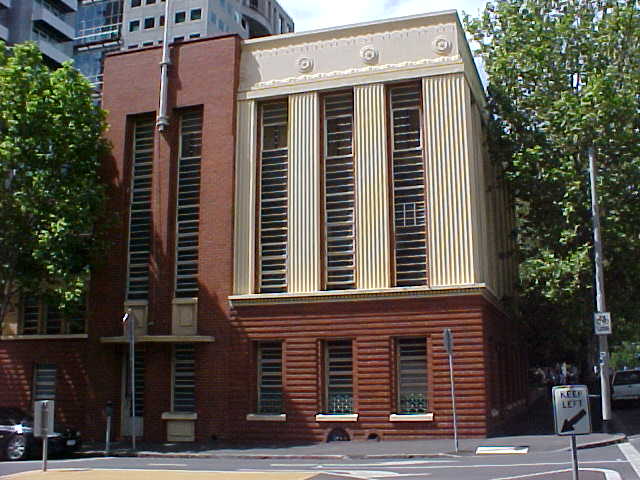
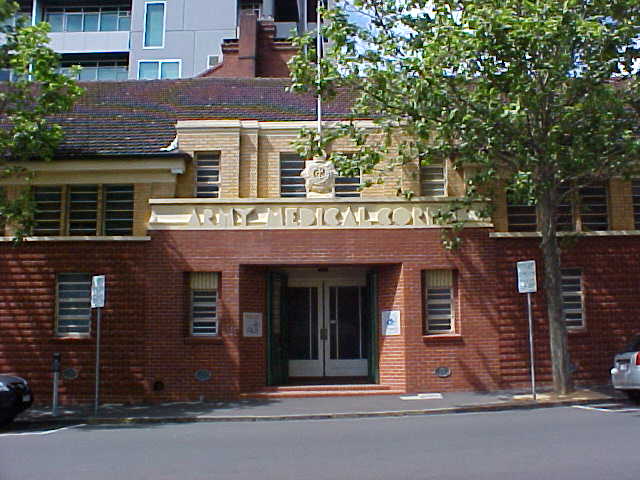
The Australian Army Medical Corps Drill Hall was built at the southern corner of William Street and A’Beckett Street, Melbourne, between 1938 and 1939 by J Whitelaw of Richmond, at a budget cost of 25,947 pounds. The architect was George Hallandal of the Victorian section of the Department of the Interior, Works Branch.
The featured materials in this late 1930s building are predominantly brick and plaster. The red brick exterior of the building features strong vertical and horizontal lines, and fluted pilasters. Inside the building features arches, keystones, coffered ceilings, built-in seats, Dutch or stable doors to the offices, and building is notable for the quality of the work of bricklayers, plasterers and carpenters who all contributed to its completion.
The site was continuously occupied by the Army from 1866 to 1988. From 1866 the small weatherboard West Melbourne Orderly Room and the adjoining drill hall were used by Colonial Volunteer forces. In 1900 a contract was signed for the construction of new weatherboard quarters at the eastern end of the site. All were demolished for the Medical Corps buildings.
Post war use of the building to 1988 included Medical Corps Reserve training, premises for the 3rd Psychology Unit, army publicity (with printing equipment), intermittent drill training (including rehearsals for Legacy shows) and garaging of vehicles. By 1990 the building had been added to the Historic Building register as being of state-wide architectural and historical significance. The western end of the building building became the premises of the Royal Historical Society of Victoria in August 1999.